
7 Easy, daily ventilation habits that work.
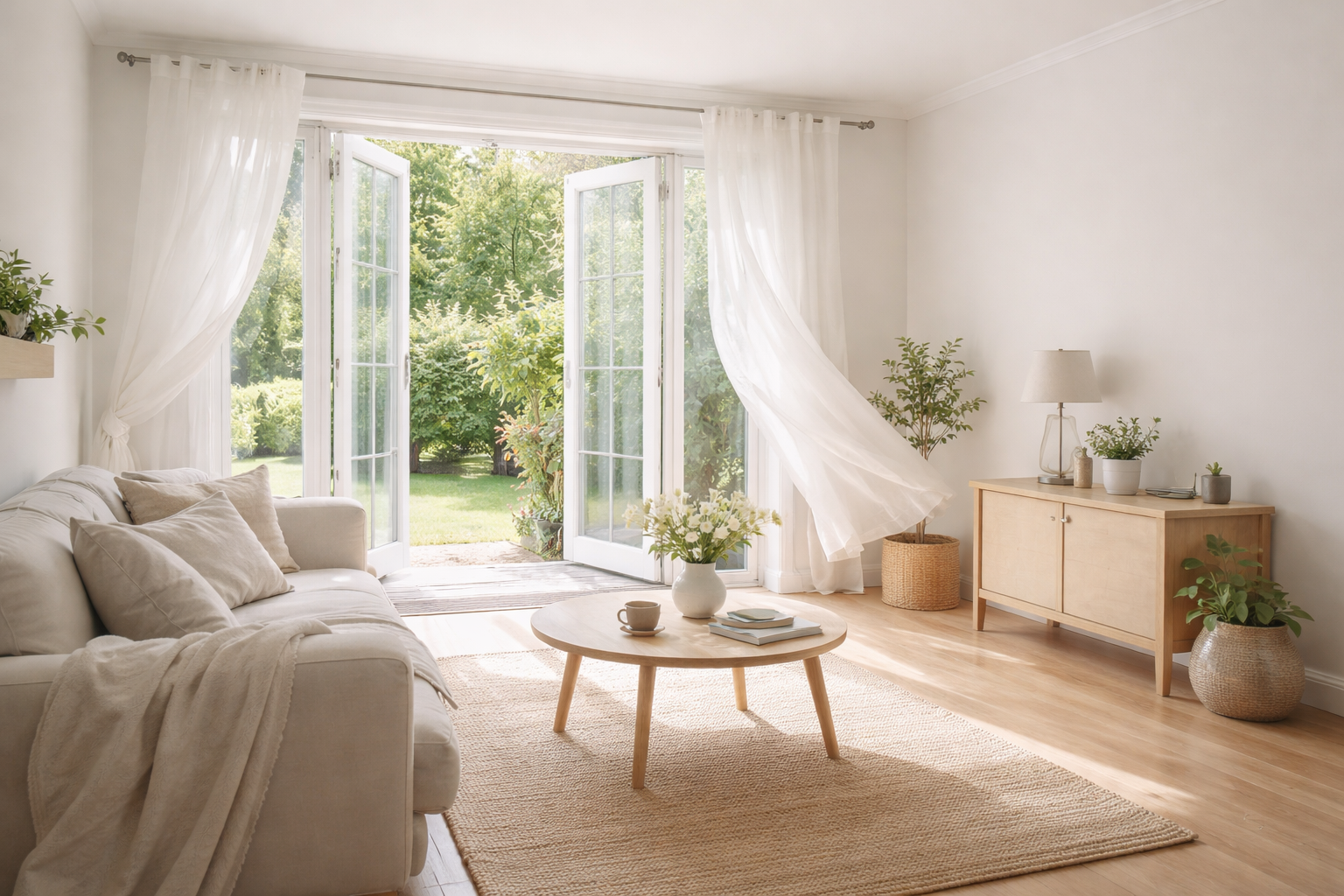
Stoßlüften - shock ventilation
Shock ventilate once or twice a day.
A growing social media trend highlights a German method called Stoßlüften - often translated as shock ventilation.
This means opening multiple windows wide for 5–10 minutes instead of leaving them cracked open all day.
Open windows in more than one room
Create a cross breeze if possible
Do it in the morning and evening
This rapidly replaces stale, humid air with fresh air without cooling the building too much. It removes moisture far more effectively than leaving a window slightly open for hours.
2. Keep trickle vents open.
If your windows have trickle vents (small vents at the top frame), they are designed to stay open.
Leave them open all year where possible
They provide gentle background airflow
They help moisture escape continuously
Closing them traps humidity inside the property.
3. Open internal doors during the day.
Bedrooms trap moisture overnight from breathing.
Open doors once you wake up
Let air circulate through the home
Prevent humidity from building up in one room
This is especially important for smaller bedrooms, box rooms, and storage areas.
4. Don’t keep blinds and curtains shut all day.
Heavy curtains and closed blinds trap cold, damp air against windows.
Open them daily
Allow air and light to reach the glass
Help surfaces warm up and dry
This reduces condensation around window frames and reveals.
5. Ventilate after showers and cooking.
Bathrooms and kitchens produce the most moisture in the home.
Always use extractor fans
Leave them running 15–20 minutes after use
Open a window briefly if safe
Keep doors closed during showers or cooking
This stops steam spreading into the rest of the property.
6. Create cross-ventilation.
Air needs a path to move.
Open windows on opposite sides of the home
Even 5 minutes helps
Encourage a natural airflow route
This removes trapped moisture quickly.
7. Allow furniture to breathe.
Large furniture pushed tightly against external walls creates cold pockets.
Leave a small gap behind wardrobes and sofas
Allow airflow behind them
Reduce hidden damp spots
This is a common cause of mould forming behind furniture.
Why ventilation matters.
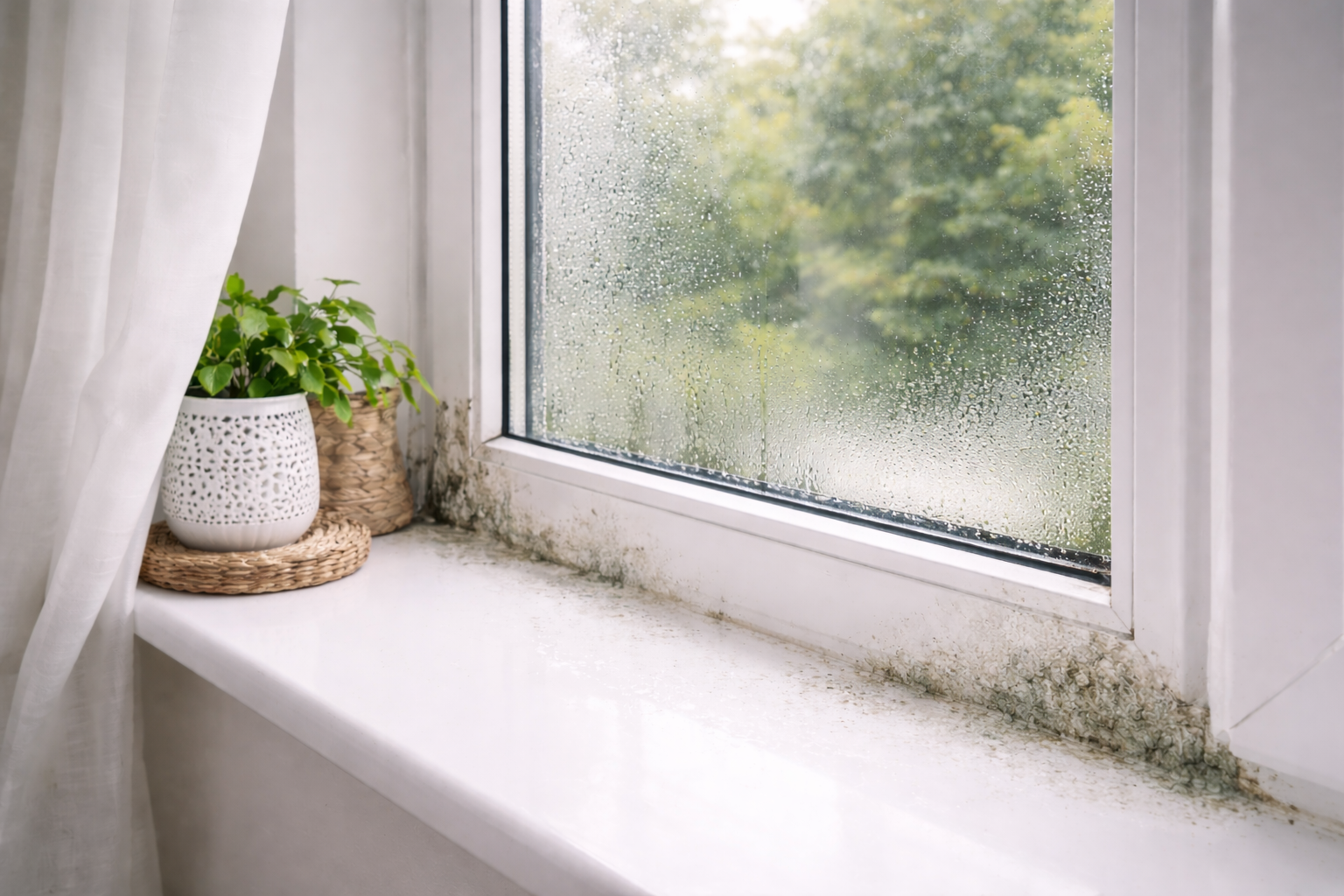
Trapped Moisture
Homes produce litres of moisture every day. Without ventilation, that moisture stays trapped indoors. When warm humid air meets cold surfaces, condensation forms. Repeated condensation leads to damp patches and eventually mould growth.
Ventilation helps by:
Removing excess moisture
Refreshing indoor air
Reducing condensation
Supporting healthier air quality
Lowering the risk of mould returning
Ventilation isn’t about making a home cold. It’s about managing airflow so moisture doesn’t build up.
Ventilation and heating work together.
Many people worry that ventilating wastes heat. In reality, short bursts of ventilation paired with steady heating are far more effective than sealing a home tightly.
A warm home can hold more moisture safely in the air. When you ventilate briefly, you remove that moisture without cooling the structure excessively. A cold sealed home, on the other hand, encourages condensation.
Ventilation and heating are partners, not enemies, and we will do a deeper dive into this relationship in another blog.
The bigger picture.
Ventilation isn’t about perfection. It’s about consistent habits that keep moisture under control. A few minutes of airflow each day prevents long-term issues that are far more expensive and disruptive to fix later.
If condensation and mould return despite good ventilation, there may be underlying structural issues such as insulation gaps, leaks, or cold bridges. In those cases, a professional investigation can identify the root cause.
Summary.
Healthy homes need airflow.
Shock ventilation, trickle vents, open internal doors, and proper bathroom and kitchen ventilation dramatically reduce moisture levels. These simple habits improve air quality, reduce condensation, and help prevent mould growth.
Ventilation is one of the easiest and most powerful tools for protecting your home, and it starts with small daily actions that anyone can follow.

A well ventilated home, is a happy home.