
Mould is a symptom, not the cause.
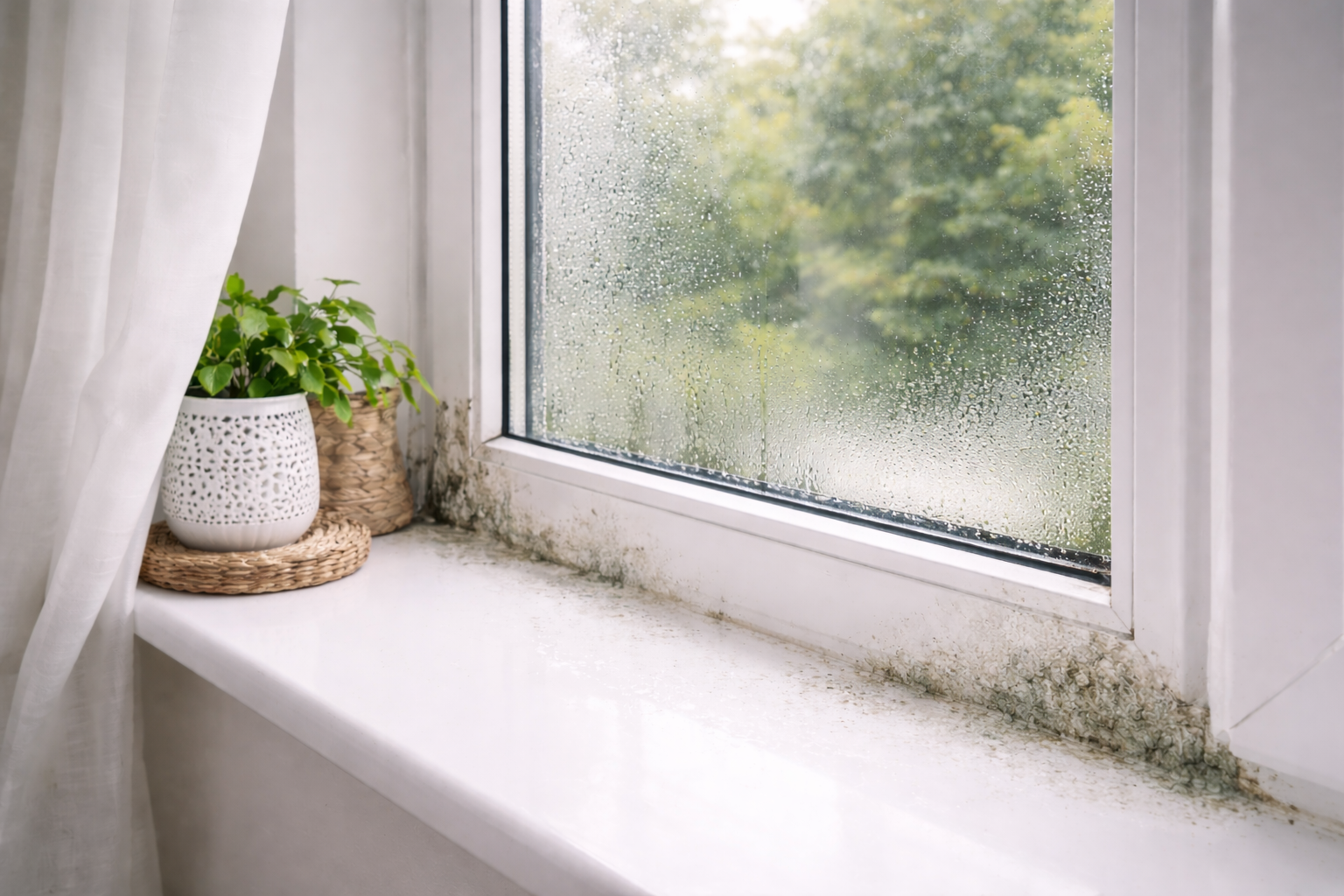
Mould only grows where there is excess moisture.
If you’ve cleaned mould before only to see it return weeks or months later, you’re not alone. This is one of the most common frustrations for homeowners, landlords, and tenants across the UK.
The key thing to understand is this:
Mould is a symptom, not the cause.
Until the underlying moisture problem is identified and addressed, mould will continue to come back, no matter how many times it’s wiped away.
The Real Reason Mould Keeps Returning.
Mould only grows where there is excess moisture. Cleaning removes what you can see, but it doesn’t change the conditions that allowed it to grow in the first place.
When moisture remains, mould spores naturally present in the air will simply settle and regrow.
In homes and rental properties, recurring mould is usually caused by one (or a combination) of the following issues.
1. Ongoing Condensation Problems.
Condensation is the most common cause of recurring mould in UK properties.
It happens when warm, moisture-laden air comes into contact with cold surfaces such as:
External walls
Windows and window reveals
Ceilings
Corners of rooms
This is especially common in winter, when indoor air is warm but walls remain cold.
Bathrooms, kitchens, bedrooms, and living rooms can all be affected, not just “wet rooms”.
If condensation is not controlled, mould will keep returning no matter how often it’s cleaned.
2. Inadequate Ventilation.
Poor airflow allows moisture to build up and linger.
Common ventilation issues include:
No extractor fans in bathrooms or kitchens
Fans that are present but underperforming or not used
Trickle vents permanently closed
Sealed windows with no background ventilation
Without a way for moisture to escape, it settles on colder surfaces and feeds mould growth.
3. Inconsistent or Insufficient Heating.
Heating plays a bigger role in mould prevention than many people realise.
Cold properties create cold surfaces. Cold surfaces attract condensation.
Issues often include:
Properties heated for short bursts rather than consistently
Rooms left unheated to save energy
Tenants restricting heating due to rising costs
Even with good ventilation, cold walls can still encourage condensation if temperatures fluctuate too much.
4. Cold Spots and Thermal Bridging.
Mould often appears in the same places repeatedly because those areas are colder than the rest of the room.
Typical cold spots include:
External corners
Behind wardrobes, sofas, and beds
Around window frames
Solid walls with no insulation
These cold bridges attract moisture from the air, creating perfect conditions for mould, even when the rest of the room looks dry.
5. Hidden Damp or Moisture Sources.
Sometimes the moisture isn’t obvious.
Hidden issues can include:
Minor leaks behind walls or under floors
Penetrating damp through brickwork
Failed seals around windows or doors
High moisture levels trapped within building materials
In these cases, mould is often blamed on “condensation” when there is actually an underlying damp issue that needs professional investigation.
Why Cleaning Alone Doesn’t Work.
Sprays, wipes, and even professional cleaning will remove visible mould—but they do not:
Change humidity levels
Warm cold walls
Improve ventilation
Fix damp or leaks
This is why mould frequently returns to the exact same spot.
Again, mould is a symptom, not the cause. Treating the symptom without addressing the cause leads to a cycle of repeat outbreaks, frustration, and unnecessary cost.
The Importance of Addressing the Root Cause.
Long-term mould prevention requires understanding why moisture is present.
This typically involves:
Measuring moisture levels in walls and surfaces
Checking humidity, temperature, and dew point
Identifying cold spots and airflow issues
Assessing ventilation and heating patterns
Only once the cause is clear can the right solution be put in place—whether that’s improved ventilation, changes to heating strategy, remedial works, or targeted treatments.
Why This Matters particularly for Rental Properties.
For landlords and managing agents, recurring mould isn’t just inconvenient—it’s a legal and reputational risk.
Repeated cleaning without investigation can:
Leave tenants living with unhealthy conditions
Lead to repeat complaints and disputes
Fail to meet current housing standards and expectations
A proper approach protects both the property and the people living in it.
The Takeaway.
If mould keeps coming back, it’s telling you something.
Mould is a symptom, not the cause.
Until the moisture problem behind it is properly identified and addressed, mould will continue to reappear, no matter how often it’s cleaned.
Addressing mould properly means understanding the building, the environment, and the conditions that allow it to grow. That’s how you achieve lasting results, healthier homes, and fewer repeat problems.
If you are having similar issues to this, then check out how we tackle mould at it’s source by clicking here…