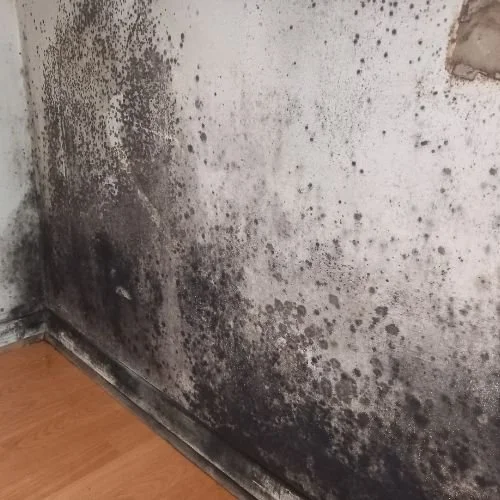
Severe mould outbreak in pantry – rented detached property.
Property overview
Property type: Detached house
Occupancy: Tenant-occupied
Room affected: Pantry
Client: Landlord (direct instruction).
The issue
The landlord contacted ClearCo after being alerted to a significant mould outbreak in the pantry. The mould was extensive and worsening, raising concerns around damp ingress, potential damage to the structure, and tenant health.
Given the severity of the growth, there was initial concern that a more serious underlying damp issue might be present..

Our approach
As with all mould remediation works, we began with a full investigation before treatment. The aim was to confirm whether the mould was being driven by condensation, internal moisture, or external water ingress.
Our investigation included:
Visual inspection of the pantry and surrounding areas
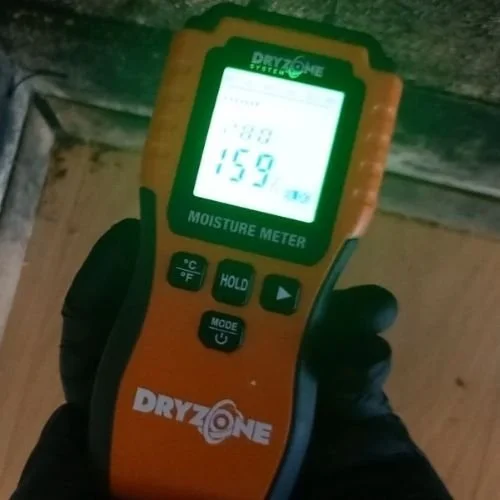
Moisture readings taken within the affected wall
Assessment of internal humidity and airflow
External inspection of the corresponding outside wall.

Investigation findings
Initial moisture readings taken internally were elevated, confirming that the wall was holding excess moisture rather than being affected by surface condensation alone.
Because of this, we extended the investigation externally.
On inspection, we found that:
The tenant had created flower beds directly against the external wall
Soil levels had been built up above the damp proof course (DPC)
This allowed moisture to bridge the DPC and penetrate the brickwork
This explained both the high moisture readings and the severity of mould growth inside the pantry.
The mould was therefore being driven by external water ingress, not internal humidity.
Remediation work carried out
Once the cause was identified, remediation works were carried out in a structured and controlled way.
This included:
Full mould treatment of the affected pantry wall
Drying out of the damp wall to reduce internal moisture levels
Preparation of the surface once dry
Application of an anti-mould / damp-resistant paint to help protect the area going forward
All works were completed with the tenant in situ and minimal disruption..
Reporting & recommendations
A written report was provided to the landlord outlining:
Investigation findings
Moisture readings taken
Confirmation of external DPC bridging
Details of the remediation works carried out
Clear recommendations were also provided, including:
Reducing external soil levels below the damp proof course
Ensuring future landscaping does not bridge the DPC
Monitoring the treated area once external levels were corrected
These steps were essential to prevent moisture from re-entering the wall..
Outcome.
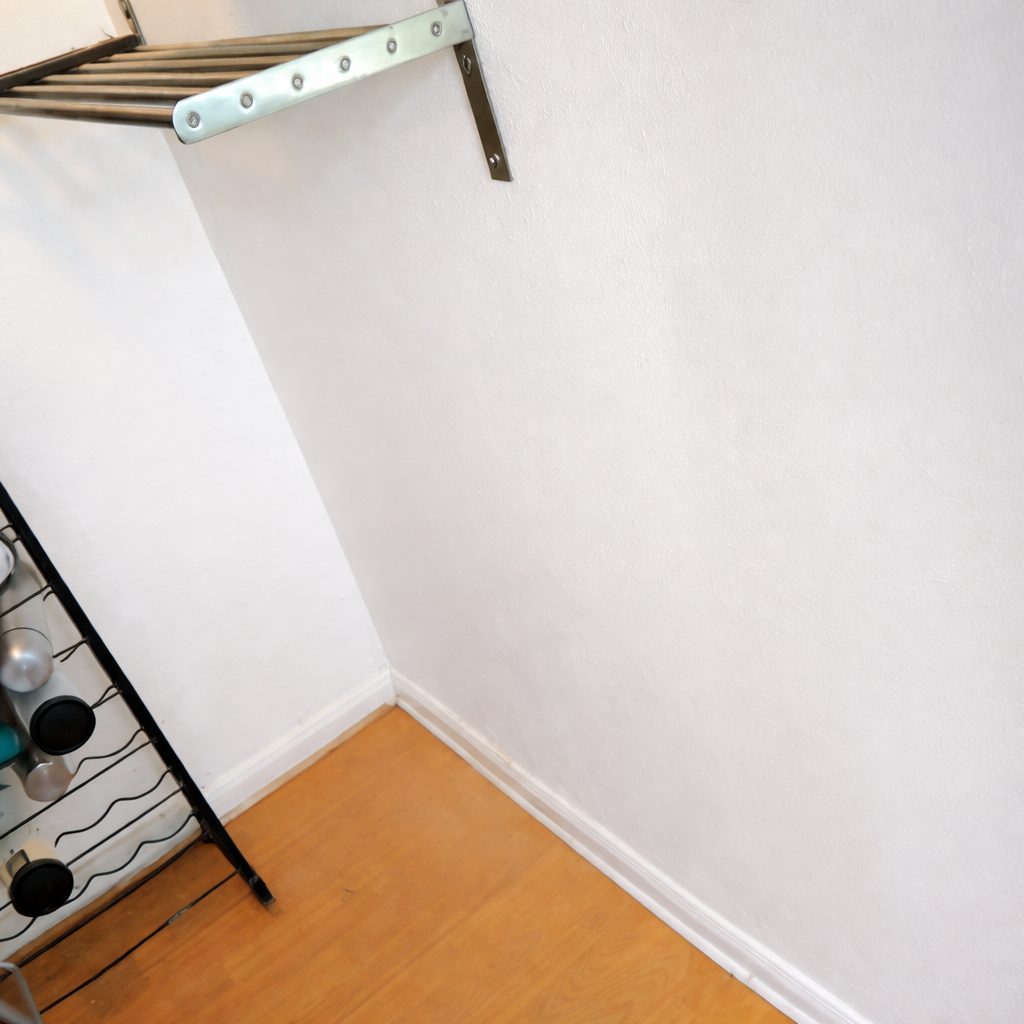
The mould outbreak was successfully treated, the wall was dried and protected, and the root cause was clearly identified and explained.
By addressing both the internal damage and the external cause, the risk of mould returning in the pantry was significantly reduced, giving the landlord confidence that the issue had been dealt with properly..

Why this case matters
This case highlights how mould can sometimes be driven by external factors that aren’t immediately obvious from inside the property.
Without taking moisture readings and checking externally, the issue could easily have been misdiagnosed and repeatedly treated at surface level. A proper investigation allowed the real cause to be identified and resolved.